Cyber security: Built into Microsoft. Optimised by String.

Most organisations already run on Microsoft.
Microsoft 365. Azure. Entra ID (Azure AD). SharePoint. Teams.
What many don’t realise is that Microsoft is already one of the most powerful cyber security platforms in the world - but only if it’s configured, monitored and optimised properly.
Out of the box, Microsoft gives you tools.
Security Defaults provide a strong starting point.

However, a baseline isn't enough for modern risk, regulatory compliance or cyber-insurance scrutiny.
That’s where we come in.

Microsoft invests billions in security. How well are you using it?

Microsoft designs its platforms with security at their core – protecting identities, data, devices and infrastructure at global scale.

But simply owning Microsoft licences doesn’t mean you’re protected.

Default settings are designed for ease of deployment, not for:

  • Cyber insurance scrutiny
  • Regulatory compliance
  • Modern attack techniques
  • Real‑world user behaviour

As a result, gaps often remain.

And those gaps are usually invisible until something goes wrong.
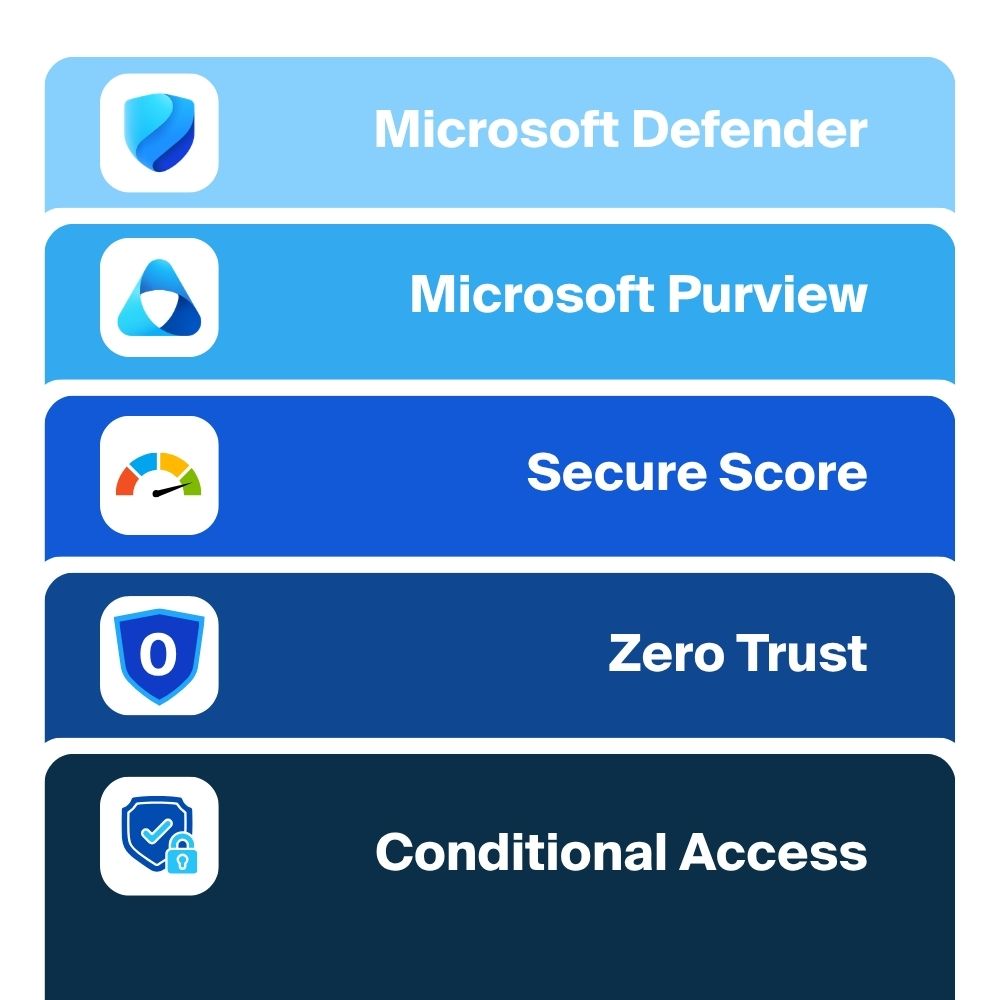
How Microsoft secures your environment - when configured correctly

We build your cyber security strategy around Microsoft’s native security stack, ensuring it works as a unified defence rather than disconnected features.
Each layer plays a specific role.
Together, they reduce attack surface, detect threats earlier, and limit impact.

Core security tools within Microsoft


Microsoft Cybersecurity stack

Microsoft Defender

Microsoft Defender provides real‑time protection across identities, endpoints, email, cloud apps, and servers.

When configured properly, it:

  • Detects threats early, including ransomware and phishing
  • Correlates signals across your environment
  • Responds automatically to contain incidents
  • Reduces attacker dwell time without waiting for human intervention

Without tuning, however, alerts can be missed – or noise can overwhelm internal teams.

That’s why we configure Defender to support your security operations 24/7, not just during office hours.

Microsoft Purview

While Defender protects systems, Purview protects data.

Purview helps you understand where sensitive data lives and how it’s being used.

In practice, we use Purview to:

  • Discover and map sensitive data
  • Apply sensitivity labels and protection policies
  • Reduce the risk of accidental or malicious data loss

As a result, organisations gain stronger control over compliance, audits, and commercially sensitive information.

Microsoft Secure Score

Secure Score provides visibility into your overall security posture and highlights where risk still exists – benchmarking your organisation against similar ones.

However, a score on its own doesn’t reduce risk.

Instead of just showing you the numbers, we:

  • Interpret what actually matters for your environment
  • Prioritise actions that reduce risk fastest
  • Improve security without unnecessary disruption

Used correctly, Secure Score becomes a continuous improvement tool, not a box‑ticking exercise.

Zero Trust security model

Microsoft’s security is built around Zero Trust – the principle that nothing is automatically trusted, even inside the network.

We help implement Zero Trust by:

  • Verifying every user and device
  • Enforcing least‑privilege access
  • Continuously assessing risk

This dramatically reduces the impact of stolen credentials and insider threats.

So, protection follows your people, data and systems – wherever they operate.

Conditional Access

Conditional Access is one of the most powerful controls in Microsoft Entra ID. It replaces “one size fits all” security with intelligent, risk-based policies.

Configured correctly, it helps people block the most common account takeover paths without getting in the way of legitimate users.

We use Conditional Access to:

  • Restrict or challenge sign-ins based on location and risk (for example, unexpected overseas access attempts)
  • Require compliant or managed devices (via Microsoft Intune) to access sensitive applications and data

Measurable, defensible security

Most importantly, you can be confident that your Microsoft environment isn’t just enabling productivity – it’s actively protecting the business behind it.

Our Cyber Assessment Framework gives you:

  • A clear view of your current risk
  • A prioritised remediation plan
  • Practical evidence for insurers, auditors and leadership

Book a Cyber Assessment Framework review to baseline your security posture, identify quick wins, and agree a realistic roadmap.

Cyber Security

FAQ's

Why is cyber security important for businesses?

Cyber security helps protect your organisation against threats such as phishing attacks, ransomware, data breaches and unauthorised access. A successful cyber attack can result in financial loss, operational disruption and reputational damage, making proactive protection essential for businesses of all sizes.

Are small and medium-sized businesses targeted by cyber criminals?

Yes. Cyber criminals often target small and medium-sized businesses because they may have fewer security controls and resources than larger organisations. Strong security practices, employee awareness training and modern security solutions can significantly reduce the risk of attack.

What are the most common cyber security threats facing businesses?

Some of the most common threats include phishing emails, ransomware, malware, password attacks and social engineering. As cyber threats continue to evolve, organisations should regularly review their security measures to help identify and respond to emerging risks.

How can Microsoft security solutions help protect my business?

Microsoft security solutions provide a range of tools designed to help detect threats, secure identities, protect devices and safeguard sensitive data. When combined with the right strategy and ongoing management, these tools can help strengthen your organisation’s overall security posture.

How do I know if my organisation's cyber security is strong enough?

Many organisations only discover weaknesses after an incident occurs. Regular security assessments, reviews of existing controls and monitoring of potential vulnerabilities can help identify areas for improvement before they become a problem.

What should I do if my business experiences a cyber attack?

Acting quickly is essential. The first priority is to contain the threat, limit any potential damage and investigate what has happened. Having a clear incident response plan in place can help organisations respond effectively and recover more quickly.

Can cyber security solutions help businesses meet compliance requirements?

Yes. Effective cyber security measures can support compliance with regulations and standards by helping to protect sensitive information, control access to data and improve visibility across your IT environment. Specific requirements will depend on your industry and regulatory obligations.

Is cyber security a one-time project or an ongoing process?

Cyber security should be viewed as an ongoing process rather than a one-off project. Threats change constantly, which means organisations need to continually review, update and strengthen their security controls to maintain effective protection.

How can we help?
Let's Talk